Deflocculant Na2CO3 - decanted fines in jar test
Deflocculant - in most cases in mineral separation from the
gangue ("waste material") in an ore, one wants every particle to be
separate. Not flocculated. Hence - deflocculant.
In many cases, "simple" Na2CO3 - sodium carbonate - commonly available
in its hydrated form as "washing soda", can be a deflocculant.
[not tested here - also have SHMP - Sodium Hexametaphosphate, which is
unambiguously considered a powerful deflocculant]
The test seen here:
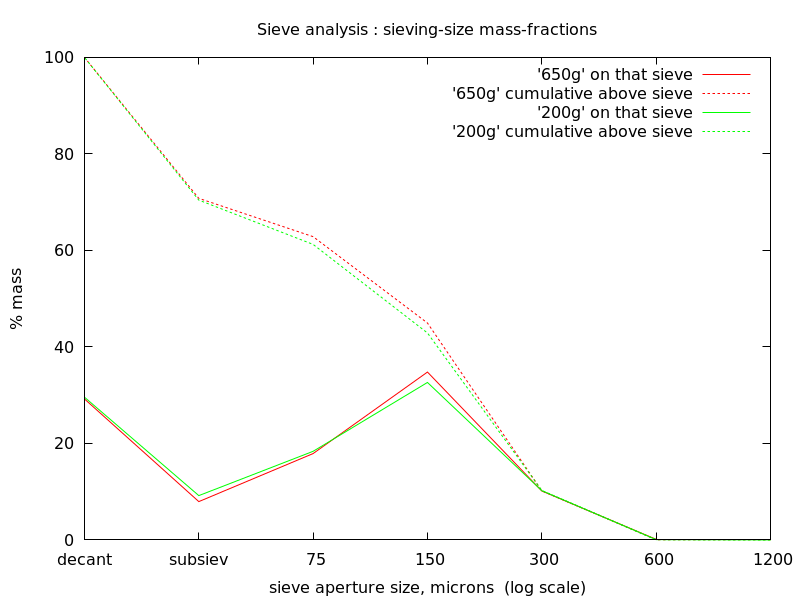
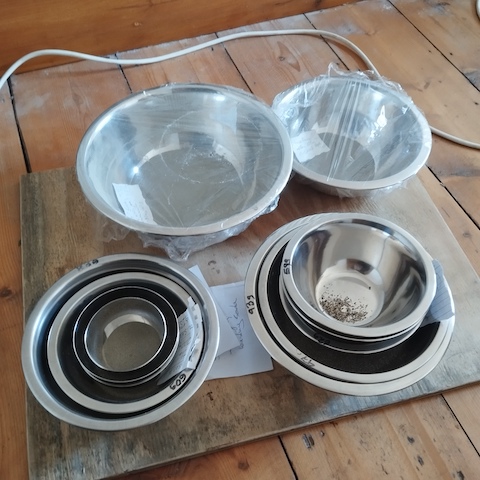
- are on an ore previously seen comminuted (ground) and
particle-size-analysed
- the "fines" referred-to are seen there
are:
- from a cassiterite (tin) ore
- the 173g of decanted fines from the 650g of comminute previously
treated with sodium carbonate
- seeks to replicate some extent of "hindered settling" seen on
03February2026
- 173g of decanted very-fines from Cornish cassiterite ore; 1Litre
of water; ~9g of "washing-soda" (reagent-grade equivalent 3.3g of
sodium carbonate)
- hence slurry (pulp) mass-ratio solids:water of 173:1000
- mixed with small (~50mm dia) helical plaster-mixer in an electric
drill
- in jar, also re-mixed by vigorously shaking the jar
Shaken at 21:11:
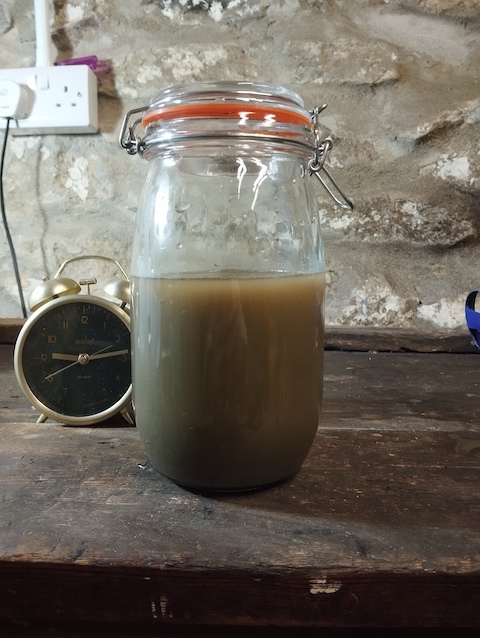
at 3 minutes
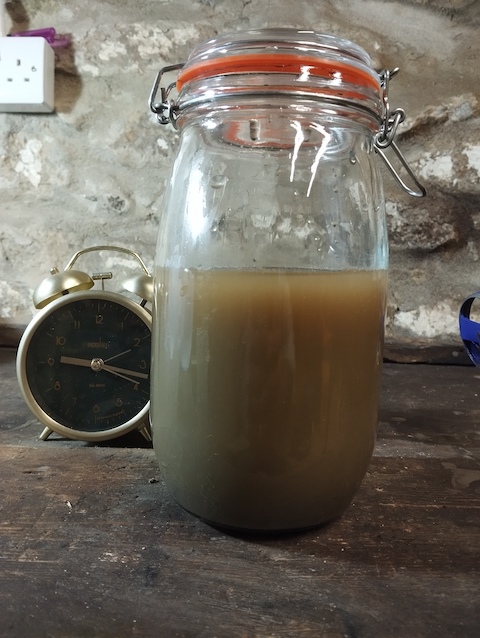
at 6 minutes
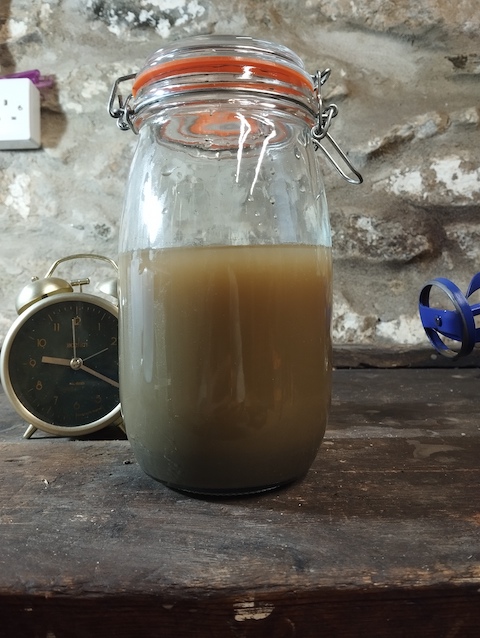
at 9 minutes
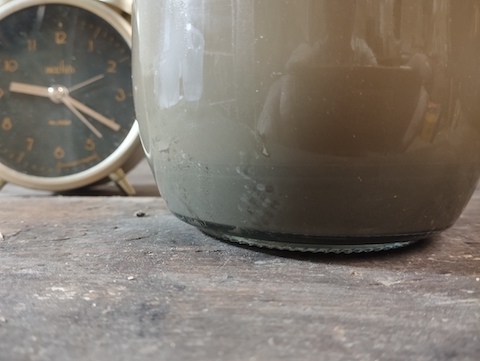
at 9 minutes
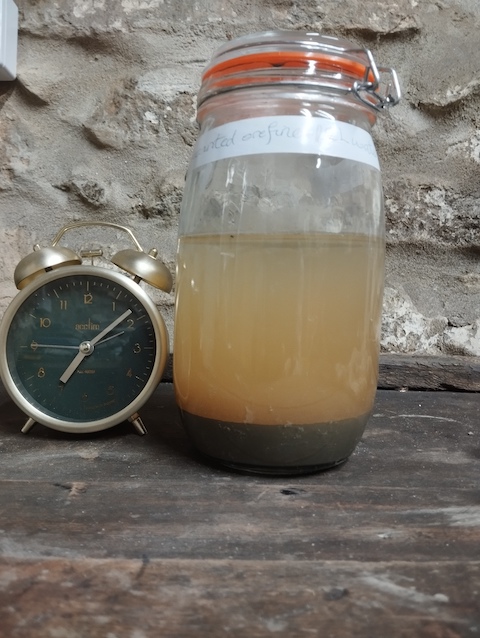
at 10 hours
What is seen:
- rather slow settling
- formation of a nearly-transparent "disc" of fluid on top of
majority turbid supernatant
both suggestive of hindered settling (?)
- fines still supernatant at 10 hours meaning extremely fine
suspension - which suggests there is effective deflocculation
These tests, with the preceding simpler tests in jugs and glasses,
were a context for thought on the issues ...
Another sedimenting/settling/deflocculant test which did not work
From a couple of days ago - on
my YouTube channel
- video currently at this link with video title
Mineral processing experiment - did not work and no entitlement it would
(R. Smith, 24Mar2026, 26Mar2026 (lnk p-s-a))